
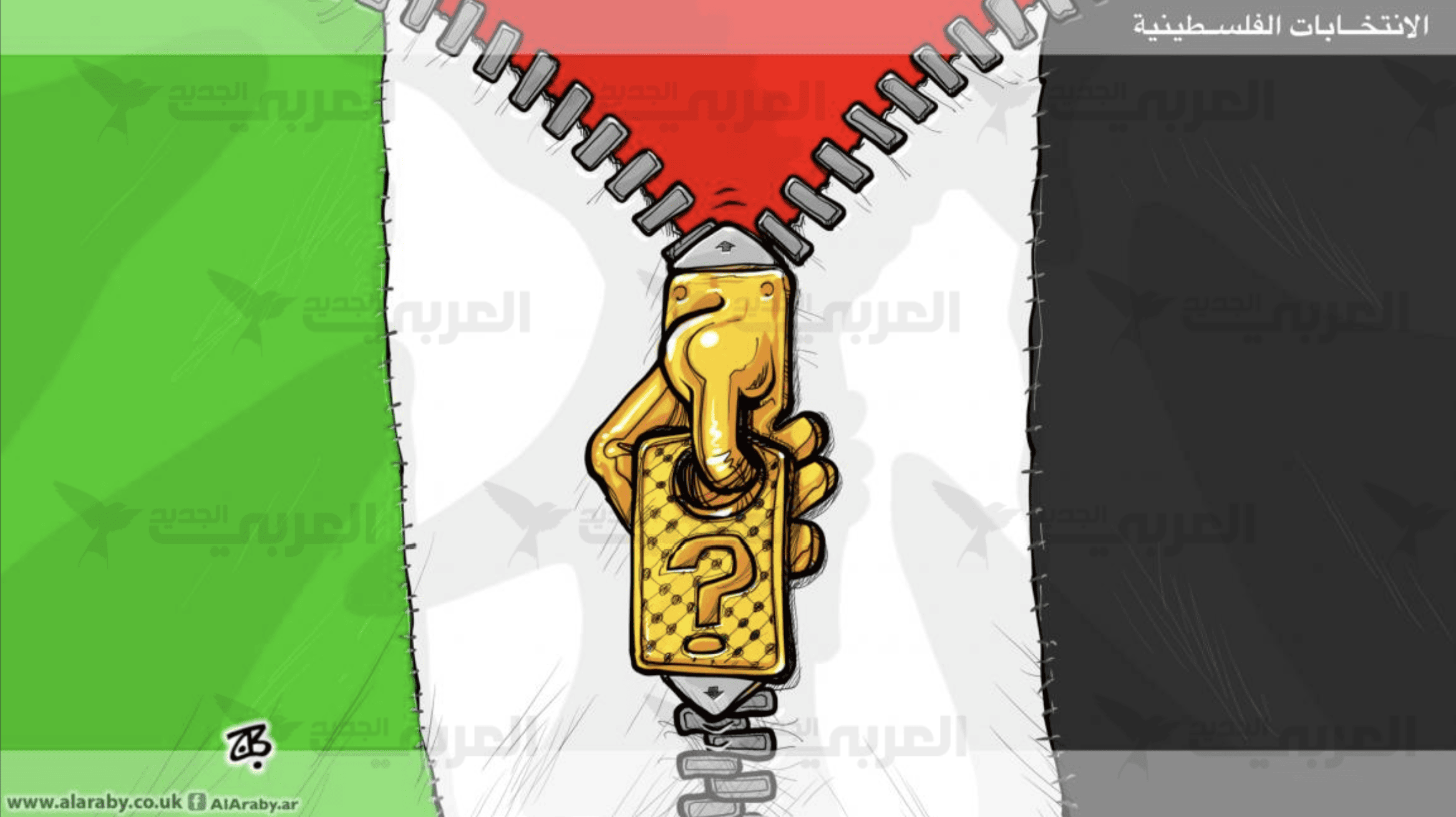

In his article, Hani Al-Masri examines President Mahmoud Abbas's unexpected announcement that presidential elections will be held early next year. He argues that while the announcement may appear to signal a democratic breakthrough, the central question is not whether elections take place, but whether they will serve as a vehicle for meaningful change or merely legitimize an increasingly dysfunctional political reality.
Al-Masri notes that Palestinian presidential elections are long overdue. They were originally supposed to be held in 2009, but political division between Palestinian factions provided a convenient justification for postponement. In his view, President Abbas has spent years either delaying or circumventing elections, largely out of concern over their potential outcome. He points to the cancellation of the 2021 elections, when there were strong indications that Fatah's electoral list would not emerge as the leading vote-getter.
The author recalls that Abbas had previously promised both French President Emmanuel Macron and Saudi Crown Prince Mohammed bin Salman that presidential and legislative elections would be held. Yet instead of issuing decrees to implement those commitments, the political leadership shifted its focus toward local elections, convened Fatah's Eighth Congress, and issued a decree for Palestinian National Council elections while sidestepping presidential and legislative elections. Only now has a date for presidential elections finally been announced.
Al-Masri argues that "the success of any electoral process requires comprehensive national consensus that includes all political and social forces, without excluding anyone." He suggests that one reason for the delay in announcing elections was that it would force Abbas into one of two difficult choices.
The first would be to run for office himself at the age of 91, despite years of mounting domestic and international calls for a clear succession plan and transitional mechanism. Various Arab and international actors have reportedly proposed alternatives, including the formation of a fully empowered government while reducing the presidency to a largely symbolic role, transferring most powers to a vice president, or advancing another candidate instead.
The second option would involve backing a successor, a move carrying significant political risks—particularly because of the potential candidacy of imprisoned Fatah leader Marwan Barghouti. Al-Masri notes that Barghouti had already announced his candidacy in 2021 as part of the Freedom List led by Nasser al-Qudwa, and that his candidacy was one of the factors contributing to the cancellation of those elections. Opinion polls over the years have consistently shown him outperforming other potential candidates in a competitive presidential race.
Addressing the obvious question of how an imprisoned individual could realistically seek office, Al-Masri argues that such a candidacy would form part of a broader political struggle with Israel. He suggests that a Barghouti victory could generate Palestinian, Arab, regional, and international pressure for his release.
According to a source cited by the author, Israel communicated a clear message to the Palestinian leadership: any future elections must follow the framework established in previous agreements and mirror the elections planned in 2021. In other words, elections should be conducted under the Palestinian Authority's Basic Law rather than under a constitution of a sovereign Palestinian state or through elections to a parliament of the State of Palestine. Al-Masri believes this position helped revive discussion of presidential elections while simultaneously freezing plans for a new constitution and delaying the proposed political parties law.
The article highlights another significant issue: future elections may no longer require candidates to explicitly endorse the political commitments of the Palestine Liberation Organization. Instead, they may only need to commit themselves to the PLO, its program, and international legitimacy, as outlined in the draft Palestinian National Council election law.
Yet Al-Masri argues that the deeper problem remains unresolved. Political conditions continue to impose what he describes as a low political ceiling on electoral competition, effectively ensuring outcomes that reinforce the status quo. This comes at a time when, in his assessment, the official political program has reached a dead end and requires "radical review, comprehensive evaluation, and fundamental change" rather than being imposed as a prerequisite for participation.
He warns that easing political restrictions could encourage broader participation, while maintaining, or tightening, them could trigger widespread boycotts and raise serious questions about both the credibility of the elections and the legitimacy of the institutions they produce.
Turning to the issue of Palestinian National Council elections, Al-Masri argues that these present far greater complexities than presidential or legislative elections. The PLO, he stresses, is not merely another representative institution. Rather, it embodies the Palestinian national liberation movement and derives its legitimacy from decades of struggle, broad coalition-building, commitment to the national cause, and its role as the collective national home of Palestinians everywhere.
Treating the PLO as if it were simply an institution of a sovereign state, he contends, risks granting distorted legitimacy to an authority that manages a population living under occupation rather than strengthening the national liberation movement itself. The longstanding tension between the PLO, the Palestinian Authority, and the State of Palestine cannot be resolved by blurring the distinctions between them. The PLO represents all Palestinians, while the Palestinian Authority is meant to administer Palestinian affairs in the West Bank and Gaza under the PLO's authority, not the other way around, which Al-Masri suggests has increasingly become the reality.
The challenges become even greater when considering the fragmented geography of the Palestinian people. Palestinians live under vastly different circumstances: inside Israel, under Israeli occupation, in refugee camps, and across the global diaspora. As a result, holding elections may be prohibited in some countries, politically sensitive in others, and administratively difficult elsewhere.
Al-Masri also questions why no serious effort has been made to establish an electoral registry for Palestinians abroad. The absence of such preparations, he argues, raises concerns that appointments rather than elections could ultimately determine representation, even in places where voting would be feasible.
He argues that if there had been genuine political will to hold elections wherever possible, preparations would have begun years ago through negotiations with host countries. Such efforts could have enabled participation by more than two million Palestinians abroad, including Palestinians in Syria, Lebanon, numerous Arab and foreign countries, and over one million Palestinians in Jordan who do not hold Jordanian citizenship.
Regarding Palestinians inside Israel, Al-Masri stresses the need for a formula that safeguards both their interests and their political voice without jeopardizing the gains they have achieved or their continued presence on their land as Israeli citizens. He suggests that the Higher Follow-Up Committee could provide a suitable framework for their representation.
Jerusalem, he argues, remains a central issue that cannot be left unresolved. A national agreement on its representation in elections is essential so that it does not once again become a pretext for postponing or obstructing the electoral process.
According to Al-Masri, all of these challenges point to one overarching conclusion: "the success of any electoral process requires comprehensive national consensus that includes the entire political and social spectrum without excluding anyone." Such consensus must determine the purpose of elections, their relationship to the national project, the laws and mechanisms governing them, their timing, and the conditions necessary for their success.
Only under those circumstances, he argues, can elections, particularly Palestinian National Council elections, become a tool that helps Palestinians advance their national and democratic rights.
If these prerequisites remain absent, Al-Masri suggests that postponing National Council elections may be preferable to rushing into a process that deepens fragmentation and division. Hasty elections, he warns, could create competing claims to legitimacy at a time when Palestinians face what he describes as a project aimed at eliminating the Palestinian cause, alongside the continuing war in Gaza, annexation plans in the West Bank, the absence of a political horizon, and the persistence of internal division.
At the same time, he believes Israel's ability to prevent presidential and legislative elections is more limited than its ability to obstruct National Council elections, provided Palestinians can reach a minimum level of political agreement.
His ultimate warning is that elections held amid continued division and without consensus on their purpose, legal framework, and political role may deepen exclusion, mutual accusations of treason, and competing claims to monopolize patriotism, religion, and truth. Rather than renewing the Palestinian political system, they could further entrench its crisis.
For that reason, Al-Masri advocates a pragmatic approach based on agreement over what is achievable, without requiring any faction to abandon its political program, vision, or national aspirations.
The article concludes with its central question:
"Elections are not an end in themselves; they are a means. The decisive question that must be answered before any electoral process is this: Will elections be used to change the existing reality and contribute to achieving freedom, return, independence, and equality, or will they be used to entrench the status quo and grant it a new, false legitimacy?"
For Al-Masri, the answer to that question will determine the true significance of the coming elections—and whether they serve the Palestinian national project or merely reproduce the current crisis in a different form.