
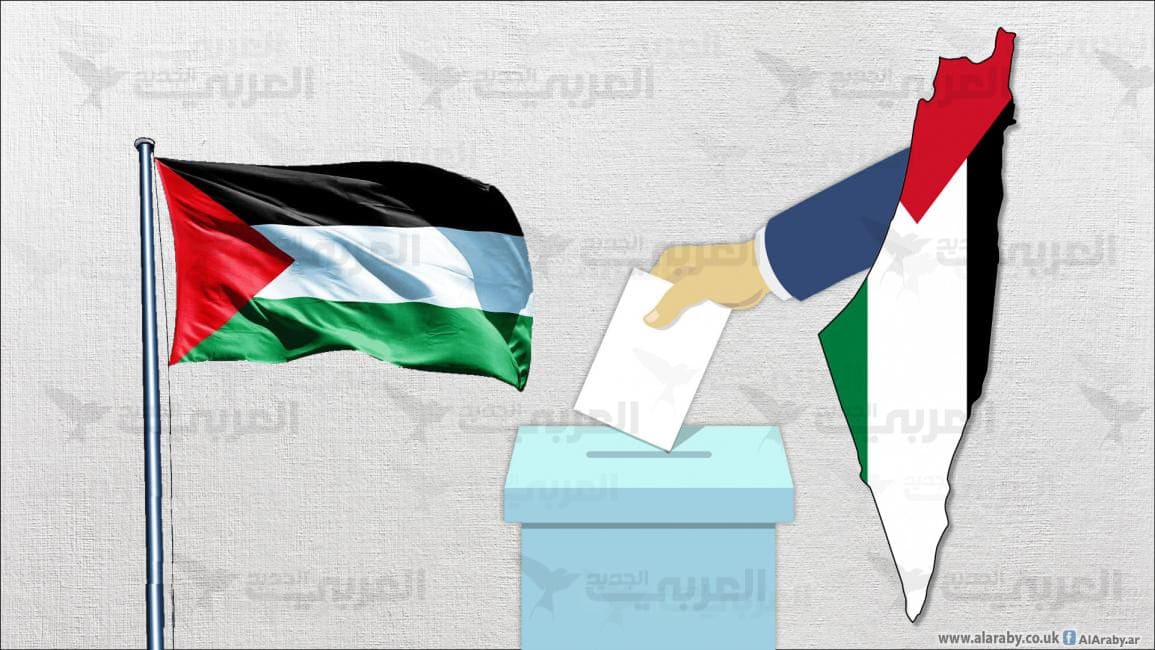

Hani Al-Masri argues that the Palestinian condition is experiencing a profound crisis that requires a comprehensive national revival. In his view, such a revival cannot be partial or superficial; it must begin with a serious reassessment of past experience, drawing lessons from accumulated failures, and moving toward reform, renewal, and ultimately comprehensive change.
He stresses that this transformation must be grounded in an inclusive national vision based on “the unity of the cause, the people, the land, and the historical narrative,” and supported by effective national institutions. This vision, he explains, should aim to achieve what is realistically possible “without exaggeration, adventurism, or leaping over reality,” while also avoiding complacency, retreat, or any compromise on fundamental national rights, objectives, and interests. It must also incorporate new realities and accumulated experience, and be capable of uniting Palestinians,across their political and social forces or most of them,within a genuine partnership and a shared national programme.
Turning to the question of political change, Al-Masri argues that, in theory, change could take place through consensus, if those holding decision-making power were convinced of its necessity. However, he considers this scenario highly unlikely. He similarly rejects the possibility of change through a coup, an uprising, or an internal revolution, describing these paths as effectively impossible under current conditions.
He explains that the Israeli occupation stands ready to block any transformation that does not serve its interests or advance its strategic objectives. In addition, he argues that such radical forms of change would require deep Arab, regional, and international backing,conditions that are not available today.
With these options closed, Al-Masri concludes that only one viable path remains: appealing to the people through elections. Accordingly, he stresses the need to prepare for elections “as if they will definitely take place,” while also taking precautions “as if they will never happen.”
Despite describing elections as an urgent national necessity, he warns that they are inherently double-edged. On the one hand, elections could become “a cover for legitimacy that falsifies the will of the Palestinian people,” prolonging an already failing political status quo and extending the life of the Oslo-based authority. On the other hand, they could serve as a solution, or at least a gateway to one, and open a path toward the political change the Palestinian system urgently needs.
Whether elections become a tool for genuine transformation or a mechanism for reproducing existing realities depends, in his view, entirely on the conditions under which they are held. For elections to fulfil their democratic function, they must be free and fair, their results must be respected, and there must be capable national forces able to translate outcomes into real political change while confronting major challenges. He argues that the function elections ultimately serve,either entrenching the status quo or changing it,is central to deciding whether participation or boycott is the appropriate political choice.
However, he maintains that the most essential condition for meaningful elections,freedom,does not currently exist. The primary obstacle is the Israeli occupation, followed by the continued Palestinian political division. Al-Masri argues that the current leadership remains committed to a political path that has already reached a dead end, yet still proceeds on the assumption that it can win elections in the aftermath of the war in Gaza, the displacement and destruction, Israel’s annexation and expansion policies in the West Bank, and the rise of violence, crime, and discrimination against Palestinians inside Israel.
In his assessment, the leadership believes that Palestinian society has turned away from resistance factions and will instead support its electoral list, under the assumption that its strategy of survival, restraint, waiting, and “removing pretexts” has preserved what can still be preserved. He further argues that the leadership expects international backing to continue, believing that renewed electoral legitimacy,combined with a transitional arrangement for the post-Abbas period,will produce an internationally accepted governing authority.
Al-Masri explains that, in order to secure victory, the leadership has systematically reshaped the electoral framework to suit its interests. He states that it has “amended, altered, and tailored” electoral laws and preparatory committees in line with its political objectives.
He recalls that initial discussions had focused on convening a Palestinian National Council session. According to informed sources he cites, had such a session taken place, the president would likely have been elected through the Council, thereby avoiding direct presidential elections that imprisoned Fatah leader Marwan Barghouti was expected to contest. However, this plan was abandoned amid European,particularly French,opposition to electing the president through the National Council, along with threats to boycott the process and suspend support. At the same time, the United States and Israel strongly opposed National Council elections, sending what he describes as a clear message to Ramallah that only legislative and presidential elections under the Oslo electoral protocol would be tolerated.
Al-Masri argues that Palestinian leadership calculations also rely on the assumption that both opposition forces and armed resistance have failed to achieve their objectives. He notes that international, regional, and Israeli actors all demand the disarmament of resistance factions and reject Hamas remaining in power in Gaza. At the same time, he says, the opposition has failed to produce a unified national alternative, lacking a shared vision, strategy, minimum programme, or unified leadership. This vacuum, he argues, leaves the current leadership free to act without meaningful constraint.
For these reasons, he concludes that genuinely free and fair elections remain a distant prospect, even though efforts must still continue to achieve them.
He identifies the Israeli occupation as the first and most decisive obstacle, describing it as a central actor in the electoral process. Israel, he argues, has the capacity to block elections, permit them selectively, or shape their outcomes in line with its interests. Even if elections are held under external pressure to convert the outcomes of war into political gains or to ensure the victory of so-called “moderates,” Israel would still retain multiple tools of influence.
This begins, he explains, with the enforcement of the Oslo electoral protocol, which defines the structure of elections and restricts their scope. He points to the shift from National Council elections toward legislative elections, followed by presidential elections scheduled for 2027, alongside arrangements for appointing most diaspora representatives rather than electing them, justified by claims that voting abroad is not feasible.
Jerusalem remains a central issue. Under Oslo arrangements, voting there is restricted to limited postal mechanisms and a small number of voters, a constraint that was one of the key justifications for cancelling the 2021 elections.
A second obstacle, he notes, is Israel’s direct pressure on candidates and factions, including Hamas, Islamic Jihad, the Popular Front for the Liberation of Palestine, and others, through arrest, exclusion, or post-election detention.
A third obstacle lies within the Palestinian political system itself. Al-Masri argues that electoral laws and procedures were drafted unilaterally by the leadership without national consensus or meaningful participation from other factions, including those within the Palestine Liberation Organization, as well as civil society and independent figures.
He adds that preparatory committees excluded many qualified actors and concentrated oversight within one dominant political current. He also notes indications that overseas elections may be postponed and that political loyalty requirements have been introduced, obliging candidates to commit to the Palestine Liberation Organization programme and international legitimacy frameworks.
In his view, this requirement undermines political pluralism by eliminating real competition between different political programmes. Instead of offering voters genuine choices, elections risk becoming a mechanism to renew the legitimacy of the existing political order and entrench what he calls the “tragic status quo.”
He further argues that successive legal amendments reinforce this engineering of outcomes. For example, lowering the electoral threshold to 1 percent may appear inclusive, but in practice could weaken organized political forces in favour of families, clans, and local power structures. He also criticizes the separation of legislative and presidential elections, the expansion of the legislative council to 200 members despite financial crisis conditions, and the marginalization of Palestinians in Israel and the diaspora, whose representation is either ignored or significantly reduced.
Al-Masri rejects reliance on Arab or international pressure, particularly from Europe and the United States, as a guarantee for fair elections. He argues that these actors oppose participation by factions they classify as terrorist organizations and ultimately align with U.S. preferences, which seek a Palestinian leadership compatible with Israeli interests and supportive of American frameworks such as the Trump plan and the so-called “Peace Council.”
He warns that if resistance-aligned forces participate and gain electoral weight, these external actors may still cancel or manipulate results, as occurred in 2021.
He further emphasizes that ongoing war, displacement, settlement expansion, apartheid realities, and internal fragmentation make the timing unsuitable for elections. In such conditions, he argues, society is preoccupied with survival, safety, healthcare, and basic needs.
He also warns that elections under current circumstances may deepen internal division, fuel chaos, and even lead to armed confrontation, especially amid tensions within Fatah and other centers of power. Such chaos, he argues, would ultimately serve Israeli interests, as Israel may seek to eliminate any unified Palestinian political framework.
Against this background, Al-Masri argues that three options must be evaluated: participation, boycott, or conditional participation.
He states that participation remains important because it could revive legislative institutions, restore oversight over the executive authority, and provide a functioning political reference point. Even flawed participation, he suggests, may be better than institutional absence.
However, participation under current conditions would exclude anyone who refuses to adhere to the PLO programme and international legitimacy framework, effectively turning political commitment into a condition for candidacy. He rejects claims that this requirement is symbolic or flexible, arguing that it effectively enforces the Oslo framework in practice.
On the other hand, boycott, without a strong unified alternative or broad national coalition, could isolate opposition forces and allow the leadership to claim renewed legitimacy and a mandate to continue its current approach.
Therefore, he concludes that there is no easy option, and that conditional participation is the least harmful choice. Such participation, he argues, must be tied to minimum national and democratic conditions, including agreement on a shared national programme, ensuring free and fair elections, rejecting political restrictions, and agreeing on mechanisms for Jerusalem, the diaspora, and areas where voting is difficult or impossible.
He calls for postponing National Council elections to allow proper preparation, updating voter registries, and consulting host countries regarding diaspora voting arrangements. He also stresses the importance of integrating Palestinians inside Israel in a way that preserves their safety and political role, potentially through coordination between the National Council, the Legislative Council, and relevant representative bodies.
A strong unified national list, he argues, would significantly strengthen this approach, particularly if it enjoys broad political backing and can overcome external vetoes. Such a list could also provide effective national oversight of the electoral process, which he considers more important than international monitoring alone.
Almasri further suggests that this strategy would be strengthened if it supported the candidacy of Marwan Barghouti for the presidency, countering attempts to sideline or neutralize him.
He concludes with a clear position: “No to Palestinian elections that falsify the popular will… yes to free and fair elections.”