

As anticipated, Palestinian President Mahmoud Abbas has issued a decree calling for Legislative Council elections to be held on 28 November, with presidential elections scheduled for the first third of 2027. According to Hani Al-Masri, this immediately raises a fundamental question: "Why now?" What has changed since 2021, when the elections were cancelled at the final stage after 36 electoral lists had already been approved and only campaigning and voting remained?
Al-Masri argues that the call for elections comes at a time when the Palestinian cause is facing its most dangerous phase, amid an ongoing war of extermination, displacement, and attempts to reshape the Palestinian political system in ways that serve efforts to liquidate the national cause. In his words, "priorities appear inverted,like a pyramid standing on its head rather than on its base." Yet he stresses that Palestinians should not accept what is being planned for them as inevitable, insisting that there remains another path to salvation if there is sufficient awareness, political will, and leadership capable of unifying the Palestinian people.
He notes that Israel's current government is more extremist and racist than the one in power in 2021, making it even less likely to permit elections that would renew the legitimacy of a Palestinian Authority it seeks to reduce to nothing more than an administrative body managing the Palestinian population under occupation, devoid of political or national substance or any prospect of independence. Influential circles within the Israeli government are openly advocating dissolving the Palestinian Authority altogether and replacing it with local administrations tied to the occupation.
At the same time, Al-Masri argues, the Netanyahu–Ben Gvir–Smotrich coalition continues to pursue a strategy aimed at resolving the conflict by eliminating the Palestinian cause through forced displacement, genocide, settlement expansion, occupation of Gaza, annexation of large parts of the West Bank, the imposition of Israeli sovereignty, the entrenchment of apartheid, and escalating attacks against Palestinian citizens of Israel. Israel's own electoral calculations, he adds, are likely to make its government even more hardline, potentially encouraging further military escalation or political crises,including restrictions on Arab political parties,to postpone Israeli elections themselves.
Against this backdrop, Al-Masri asks how elections can become the priority before a comprehensive national strategy is developed to confront these threats. He argues that Israel would not permit Palestinian elections that strengthen national legitimacy or restore unity between the West Bank and Gaza unless they produce a weaker and more compliant authority, deepen internal division and chaos, or are imposed through external pressure,pressure that currently appears absent.
Although some may expect pressure from the United States or Europe, Al-Masri dismisses this prospect. President Trump, he notes, has never been known for promoting democracy, while European support for elections remains conditional on producing a government committed to the Palestine Liberation Organization's political, security, and economic obligations, as well as what he describes as the "American-European reform agenda." Europe is unlikely to welcome a legislative council or government including movements it designates as terrorist organizations, even if formal references to "commitments" are removed from the election law.
According to Al-Masri, the Palestinian leadership's motives are primarily to renew its legitimacy, ensure its political survival, and secure Arab and international support conditioned on what is labelled "reform." However, he argues that this reform agenda does not necessarily correspond to the genuine reform demanded by Palestinians, recalling former Prime Minister Mohammad Shtayyeh's description of it as "falsehood intended to serve falsehood."
He believes the Palestinian Authority is betting that Fatah and allied lists have good electoral prospects, partly because it assesses that Hamas has lost some public support after 7 October 2023, while Palestinians' immediate priorities have shifted toward ending the war, stopping starvation and displacement, and preventing annexation. The Authority is also counting on the possibility that Hamas may not participate,whether by choice, because of legal restrictions, or due to an American, Israeli, and European veto,as well as the likelihood that Hamas candidates in the West Bank would be arrested and those in Gaza targeted.
Nevertheless, Al-Masri cautions that this strategy is risky. Elections could still be cancelled entirely, prevented in Gaza or Jerusalem, postponed once again, or limited to legislative elections while presidential elections are deferred until after the results become clear.
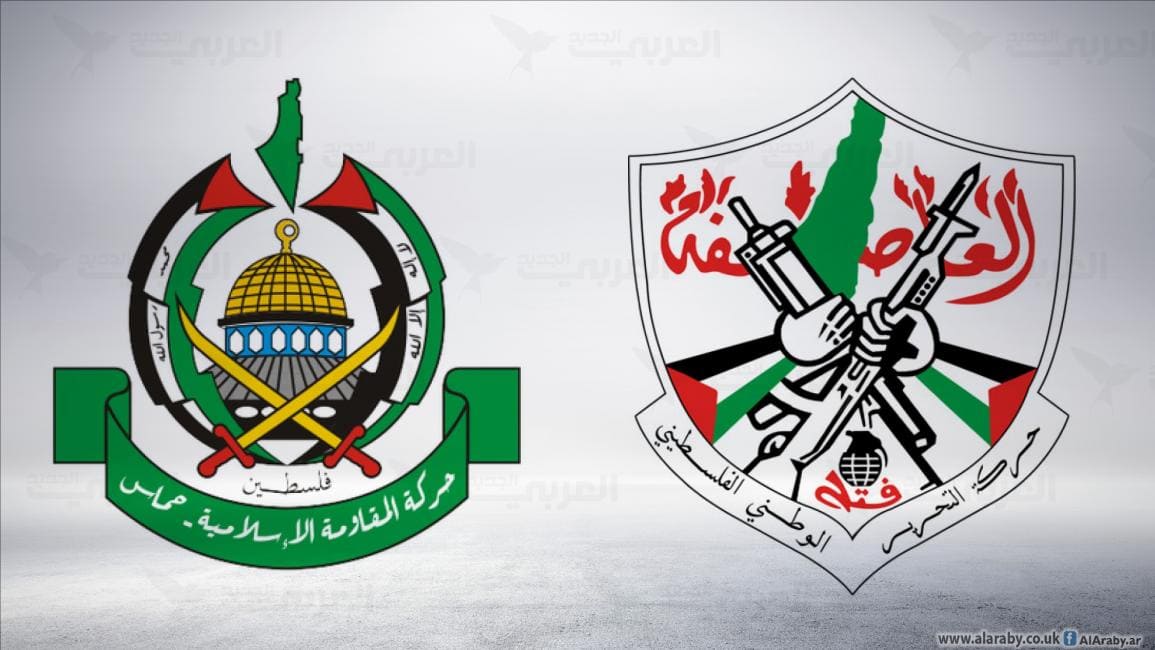
Turning to Fatah, Al-Masri argues that the movement faces serious internal divisions. The eighth party congress deepened existing fractures, leaving many members marginalized, expelled, or dissatisfied, making the emergence of multiple breakaway electoral lists highly likely. Independent, family-based, and business-backed lists are also expected to proliferate, especially after lowering the electoral threshold to 1 percent, a move he believes could transform the elections into competition among individuals and patronage networks rather than between political parties and programmes.
He also points to the possible participation of Mohammad Dahlan's Reformist Current and a list supported or led by imprisoned leader Marwan Barghouti, whom opinion polls continue to show as a strong presidential contender if Israel allows him to run,something that remains uncertain.
Hamas, meanwhile, faces equally complex dilemmas. Al-Masri notes that if it seeks integration into an internationally accepted political system, it would be expected to relinquish governance of Gaza, disarm, and transform itself into a civilian political party,conditions that are unlikely to be accepted in the foreseeable future unless they form part of a comprehensive national settlement guaranteeing Hamas meaningful participation in Palestinian political institutions, foremost among them the PLO.
Alternatively, Hamas may bet on regional developments, a possible US-Iran understanding, or its continued military presence in Gaza to secure a role in future arrangements. Yet Al-Masri warns that relying on either the US administration or the Israeli government has become "an extremely risky gamble," particularly after 7 October and amid the persistent American, Israeli, and European determination to exclude Hamas from both government and any political process. Such exclusion, he argues, "strikes at the very core of the democratic process."
If Hamas cannot compete directly, it may instead support one or more independent or sympathetic electoral lists. Likewise, Al-Masri considers it possible,though difficult,to form a broad national electoral coalition bringing together independent figures, civil society representatives, the private sector, and currents within Fatah, including both the Reformist Current and supporters of Marwan Barghouti.
Addressing criticisms of returning from the idea of elections for the institutions of the State of Palestine to elections for the Palestinian Authority, Al-Masri argues that this reflects practical realities rather than political retreat. Israel does not recognize the Palestinian state and would prevent elections for its institutions; therefore, elections for the Authority remain the only realistic option without abandoning the national project of independence.
He likewise rejects the argument that participation in Oslo-based institutions necessarily implies political recognition of the Oslo Accords, suggesting instead that existing institutions can be used as instruments for gradual change if accompanied by sufficient political will.
For Al-Masri, the opposition's greatest shortcoming has been its inability to build "a broad national front based on a unified vision, a shared political programme and strategy, and leadership capable of presenting a practical alternative." Instead, he says, it has largely limited itself to criticism without developing a comprehensive national project.
He therefore calls for establishing an open national front committed to rebuilding the Palestine Liberation Organization on democratic and participatory foundations, adopting a new national charter that safeguards Palestinians' fundamental rights,including the right of return, self-determination, independence, human rights and fundamental freedoms, and the right to resist occupation under international law,while preserving the Palestinian historical narrative and capitalizing on rapidly changing international dynamics. Such a front, he argues, should also present a unified electoral list with a realistic and implementable political, economic, social, and cultural programme.
Despite the bleak picture, Al-Masri concludes that the Palestinian situation is not hopeless. The international system is gradually shifting from unipolarity toward multipolarity, while numerous American and Israeli plans to reshape the Middle East have either faltered or retreated. These developments, he argues, create an opportunity for Palestinians,provided they can unite around a common national vision, political initiative, and effective leadership.
Ultimately, he insists that "the mistake does not lie in participating in elections or boycotting them, but in treating either option as an absolute choice." Participation in elections lacking minimum standards of freedom, fairness, and respect for the results merely grants them "free legitimacy," while unconditional boycotts lead to isolation and leave the political arena empty.
Instead, Al-Masri argues for agreeing on minimum national conditions for participation, including removing political loyalty requirements from the election law, holding legislative and presidential elections simultaneously, ensuring mechanisms to replace legislators imprisoned by Israel, establishing agreed procedures for voting in Jerusalem and other areas where polling is obstructed, and preventing Jerusalem from once again becoming a pretext for postponement.
Finally, he calls for launching a fundamentally different national dialogue, one focused on confronting current dangers, maximizing available opportunities, and preparing for every possible scenario,including Israeli or so-called "Peace Council" efforts to obstruct the electoral process. Achieving this vision, he concludes, will require a broad national political initiative and an expanding popular campaign inside and outside Palestine, so that elections become "a step forward rather than a step backward or a leap into the unknown."