
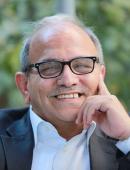
Palestine does not need to simply “replace one set of faces with another,” but rather requires “profound change in vision, approach and performance,” Hani Al-Masri argued, stressing the need for a national consensus capable of confronting the mounting risks facing the Palestinian people and protecting their national cause and rights.
Against this backdrop, Al-Masri examined the implications of the recently announced plans by Hamas, Palestinian Islamic Jihad, the Reformist Current within Fatah, the Democratic National Forum, the Nasser Salah al-Din Brigades, and others to form a broad political and electoral coalition for the upcoming Palestinian parliamentary elections. Other political figures, grassroots movements, and factions, including the Popular Front for the Liberation of Palestine, the Democratic Front, and the Palestinian National Initiative, are also considering whether to join.
Al-Masri argued that the emerging coalition could have two very different outcomes. If it becomes merely an electoral alignment against Fatah, it could further deepen the Palestinian political divide. If, however, it develops into a broader national understanding on how to confront the risks and challenges facing Palestinians collectively, it could open what he described as a “window of hope.”
He noted that the announcement came as a major shock to the official Fatah leadership, disrupting electoral calculations that had been based on the possibility of securing victory through a unified list of PLO factions. In such circumstances, elections could cease to serve primarily as a mechanism for political partnership and the renewal of legitimacy and instead become a fierce contest for dominance.
At the same time, Al-Masri said there is nothing inherently impossible or unnatural about an alliance between Hamas and the Reformist Current associated with Mohammed Dahlan. Politics, he argued, is not built on permanent friendship or enmity, but on changing interests. Relations between the two sides have gradually evolved over recent years, moving from social and humanitarian cooperation toward political coordination.
He traced the early seeds of this cooperation to a Cairo workshop aimed at ending the Palestinian division. The two sides agreed then to establish an initiative for social solidarity and reparations for families who had lost relatives during the Palestinian internal fighting, seeking to prevent the cycle of revenge and retaliation from continuing. Cooperation later expanded into the social and economic spheres and eventually included facilitating the delivery of aid to Gaza, including assistance from the United Arab Emirates.
Over time, this cooperation acquired a clearer political dimension, particularly following the meetings between Yahya Sinwar and Mohammed Dahlan in Cairo in 2017. Those meetings produced understandings concerning the reorganization of the Palestinian political system, the unification of the West Bank and Gaza, and the formation of a national unity government.
Although those understandings did not last, Al-Masri argued that they demonstrated early on that political common ground could exist between the two sides despite their deeply troubled history. These points of convergence became more pronounced after October 7, 2023, amid the continuing war and humanitarian catastrophe in Gaza and the repeated failure of Palestinian reconciliation efforts, from Cairo through Doha, the Beach Camp, Algeria, Moscow and El Alamein, and ultimately the Beijing Declaration.
He also pointed to the concentration of Palestinian decision-making within the official leadership, alongside the absence of meaningful consultation with political and social forces, as another factor encouraging various actors to seek common ground outside the formal political framework.
According to Al-Masri, the official leadership had been counting on favorable conditions for holding elections that could allow Fatah to renew its legitimacy, benefiting from the declining popularity of its rivals, Hamas’s weakened position, and the possibility that some forces might either stay out of the elections or be prevented from participating.
The developments, however, have moved in the opposite direction. Hamas has decided to participate, while efforts are now underway to build a broad electoral coalition. At the same time, opinion polls indicate a noticeable decline in the popularity of both major political forces.
Meanwhile, the Palestinian Authority and the official leadership are facing mounting political, financial, and organizational crises. These include expanding settlement activity, gradual annexation, escalating attacks, the continuing Gaza war, the Authority’s financial crisis, its declining ability to pay salaries in full, accumulating debt, and the repercussions of Fatah’s Eighth Congress, including the possibility of multiple competing Fatah lists.
As a result, Al-Masri argued, the electoral landscape is no longer what it was expected to be. The possibility of postponing the elections has therefore become increasingly real, particularly in light of Israel’s opposition to any elections that could produce a unified legislative council for the West Bank and Gaza and thereby reaffirm the unity of the Palestinian people and institutions.
The leadership could also find new grounds for postponement, including restrictions preventing the Central Elections Commission from operating freely in Gaza or in areas classified as “C,” arrests, restrictions on candidates and observers, or other forms of Israeli interference.
Against the backdrop of reports that a Fatah delegation is heading to Cairo, Al-Masri said the official leadership appears to be recognizing that the electoral equation has changed. The challenge is no longer simply to persuade PLO factions to join a unified list; it also involves attempting to prevent the formation of a broad electoral coalition and potentially seeking an understanding with Hamas and the Reformist Current.
If the elections are postponed, the calculations could shift further, particularly if developments occur on the Israeli political scene. Yet elections would remain connected to a much larger question concerning the future of the Palestinian political system, the relationship between the Palestinian Authority and the PLO, and any new arrangements concerning Gaza.
For the Palestinian left, Al-Masri said, the choices are particularly difficult. Its factions could join the broad coalition, participate in a PLO-based list, or establish an independent democratic left-wing list. But their limited electoral weight, combined with the repeated failure of previous attempts to unify the left, leaves them with limited room for maneuver.
Some factions may therefore conclude that joining a broad coalition aimed at ending political unilateralism and the Palestinian divide is more worthwhile than contesting the elections independently.
Al-Masri stressed that the Palestinian cause is passing through a decisive phase, with Palestinians facing genocide, displacement, annexation, settlement expansion, apartheid, and continuing attacks by the Israeli occupation and settlers. Elections, therefore, should not become an end in themselves.
They can be an important instrument for renewing legitimacy and rebuilding the Palestinian political system, he argued, but they should not become a means of settling the internal Palestinian struggle or excluding one side in favor of another. What is needed is neither an election that reproduces the existing division nor one designed to renew the legitimacy of one side at the expense of another.
Instead, elections should form part of a broader national process aimed at rebuilding the political system on the foundations of partnership and democracy, ending political unilateralism and division, and rebuilding the PLO and its institutions on representative foundations.
For Al-Masri, therefore, the real question is not simply “Who will win the elections?” but rather “What kind of elections do we want, what is their purpose, and within what Palestinian national project?”
If the broad electoral coalition takes shape, he cautioned against viewing it simply as an alliance designed to exclude Fatah and President Mahmoud Abbas. It could instead signal deeper changes in the Palestinian political landscape and potentially become the starting point for reshaping the political system,or it could remain a temporary electoral alliance that disappears once the elections are over.
The difference, he argued, will depend on whether the participating forces can turn their shared electoral interests into a shared political vision and treat elections as a means of rebuilding the political system rather than simply a contest for seats and power.
Al-Masri also highlighted a striking paradox: the two competing camps may, to varying degrees, converge around managing day-to-day affairs, implementing elements of the Trump plan, and postponing the political horizon. In that case, the competition risks becoming a struggle over who wins and governs, rather than over which political project can actually rescue the Palestinian cause.
Palestine, Al-Masri concluded, does not need a mere change of faces. It needs “profound change in vision, approach and performance,” together with a national consensus capable of confronting the dangers and protecting the Palestinian people, their cause, and their national rights.
Note: This is not a literal translation of the original document. It is an English adaptation that conveys all of the original article’s ideas and follows its argument and sequence. Direct quotations are taken from the original article.