
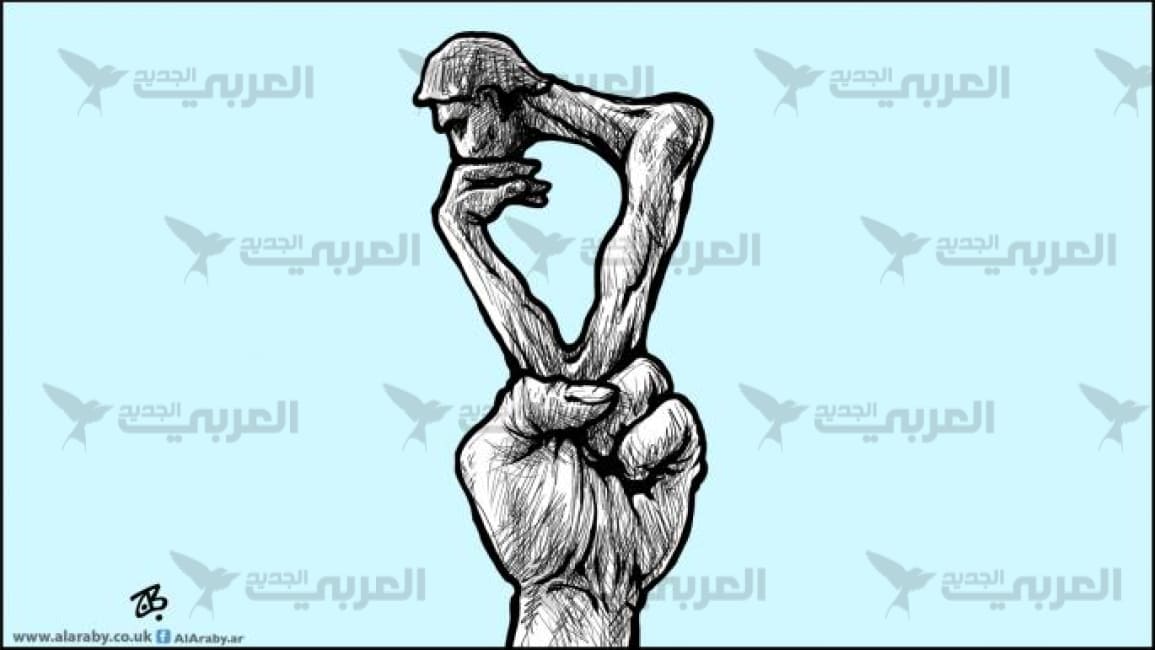

With expectations growing that the Palestinian legislative elections will most likely be postponed until next year, or possibly replaced altogether by the formation of a new National Council that would elect the President of the State of Palestine, the debate over the country’s political future is once again coming to a head.
The alternative scenario reportedly under consideration would involve forming the National Council through appointments and selected electoral colleges. According to a reliable source, the proposal is already being discussed in the President’s office, with recent visits by delegations to Palestinian communities in different areas, and efforts to organize carefully selected electoral colleges, offering further indications that such a plan is being explored.
There has also reportedly been discussion of reviving the dissolved Palestinian Legislative Council. A legal interpretation has argued that the Constitutional Court’s decision to dissolve it was itself unconstitutional, maintaining that, under the Palestinian Basic Law, the Council’s mandate remains in force until newly elected members take their constitutional oath.
Yet, in the extraordinary circumstances Palestinians now face, the more prudent approach may be to prepare for all eventualities. As the old saying goes: “Work for this world as though you will live forever, and work for the next as though you will die tomorrow.” In practical terms, that means preparing for elections as though they will go ahead, while simultaneously preparing for the possibility that they will be postponed, or cancelled altogether.
The argument for postponement is straightforward: roughly 70 percent of Gaza is under occupation, while Israel continues its military campaign and what the author describes as genocide. The occupation is also obstructing basic requirements for holding elections in the Strip, including the entry of ballot boxes and invisible ink, as well as the ability of election officials, candidates, and international observers to move freely and access Gaza.
The Central Elections Commission has, meanwhile, proposed a solution to the issue of elections in Jerusalem: allowing Jerusalem residents to vote at any polling station, on the basis that the West Bank, including Jerusalem, and Gaza constitute a single electoral district under the proportional representation system.
But that solution was not adopted. In the author’s view, the real reason the 2021 elections were postponed was fear of an anticipated defeat, not logistical obstacles. This raises an obvious question: Was Gaza not already under occupation when the election decree was issued?
Elections Under Occupation: A Recipe for Further Fragmentation?
The author warns that holding elections under occupation, amid political division, and without a clearly defined national project could do more harm than good. Rather than serving as a bridge out of the current crisis, elections could deepen political fragmentation and drive the Palestinian system further into disarray.
Several explanations have been offered for the current uncertainty.
One possibility is that the decision not to hold elections was effectively made from the outset, with the occupation of Gaza and the ongoing war serving as a ready-made justification.
Another is that calculations were based on the assumption that the Trump plan for Gaza would move forward and that Hamas would either decline to participate or be prevented from doing so. Under that scenario, Washington could pressure the Netanyahu government to facilitate elections, clearing the way for a Fatah victory, alongside local, tribal, business, and other power-based lists. The lowering of the electoral threshold to one percent could further shape the field in that direction, while dissident Fatah lists might also be brought into the fold.
But, as the author puts it, “the field calculations turned out to be different from the barnyard calculations.”
Hamas decided to participate. It announced that it preferred to do so through a broad electoral coalition bringing together the reformist current within Fatah associated with Mohammed Dahlan, Palestinian Islamic Jihad, and other forces, while leaving the door open to additional partners. The Popular Front, Democratic Front, Palestinian National Initiative, and various civil and political movements, however, have opposed the proposal.
The possibility of postponement also rests on another calculation: that the Netanyahu–Ben Gvir–Smotrich government, regardless of whether it wins or loses the next Israeli elections, has little interest in enabling Palestinians to hold elections that could renew the legitimacy of Palestinian institutions.
According to the author, Israel is not seeking to strengthen Palestinian national identity. Quite the opposite: its policies are aimed at eroding and dissolving it, while opening the way for what he describes as an attempt to eliminate the Palestinian cause through war, displacement, annexation, settlement, separation, and ethnic cleansing.
Renewing Palestinian legitimacy through elections, by contrast, would keep open the possibility of realizing Palestinian self-determination, independence, and statehood, while also restoring the political and territorial unity of the West Bank and Gaza. It could, in turn, produce an elected Legislative Council capable of challenging the so-called “Peace Council” over questions of political authority and jurisdiction.
The Missing Green Light
Against this backdrop, the author argues that it is hardly surprising that Washington has not given the green light to Palestinian elections.
The United States, he notes, has shielded Israel from pressure to implement the roadmap associated with the Trump plan, which was reportedly agreed upon by the “Peace Council” and Hamas with Egyptian, Qatari, and Turkish mediation.
A meeting in Cairo between Jared Kushner and Hamas representatives, attended by mediators, reportedly followed. The message emerging from those discussions was that Hamas could potentially play a political role after relinquishing control of the government and disarming, and that elections could then, in principle, be allowed.
But Washington and Tel Aviv do not necessarily see eye to eye. Israel’s current leadership, the author argues, has its own calculations. Any process involving Hamas relinquishing power and disarming would take months at best, and Netanyahu’s government has little incentive to facilitate such steps before Israeli elections, when doing so could further undermine its electoral prospects.
A Widening Chasm
The possibility of postponing the elections is reinforced, the author argues, by a widening gulf between the Palestinian leadership and governing institutions on one side and the public on the other.
That gap has been deepened by the broader crisis engulfing the Palestinian political system. After successive strategies have run aground, the political ceiling has fallen dramatically.
This can be seen, the author suggests, in the willingness of different Palestinian actors, both within the authorities and among the opposition, to accept the Trump plan and the “Peace Council,” despite what he describes as the latter’s colonial form of tutelage.
The picture is further complicated by years of incomplete salary payments, corruption scandals, fuel and border-crossing crises, and extremely high levels of poverty and unemployment in Gaza, alongside worsening economic conditions in the West Bank and the political fallout from Fatah’s eighth congress.
All of this has contributed to a growing disconnect between political institutions and the people they are supposed to represent.
Elections Are Not the Priority of Priorities
The author reiterates a point he has made before: under the extraordinary circumstances Palestinians now face, elections should not be treated as the “priority of priorities.”
The immediate priority, he argues, must instead be ensuring the conditions for Palestinian survival and steadfastness by stopping the destruction, displacement, settlement expansion, and systems of separation and domination threatening the Palestinian people and their national cause.
Elections, in this context, are neither the solution nor necessarily the gateway to one.
On the contrary, if held without a national project and without broad political consensus, they could become a mechanism for entrenching the existing reality: a Palestinian Authority functioning primarily as an autonomous administrative structure managing a population under occupation, rather than as an instrument contributing to the national effort to end that occupation.
The concern is not simply that elections could fail to solve the crisis. It is that they could be used to legitimize the very status quo that produced it.
Given the existing balance of power and the current regional and international environment, the author argues, Palestinians are unlikely to be permitted to hold elections that are genuinely free and fair and whose results are fully respected. If elections produce an outcome deemed unacceptable, there is a real possibility that those results could ultimately be overturned or neutralized.
The Most Likely Scenario
For these reasons, the author considers the most likely scenario to be the formation of a new National Council largely through appointments, dressed up in the formal language of “electoral colleges,” while legislative elections are postponed indefinitely, or at least until next spring, when the political picture in the region and Israel may be clearer.
Much depends on what happens inside Israel. A new government could emerge; the current coalition could survive; or no faction could manage to form a government, leaving Israel in political limbo and the current government acting in a caretaker capacity until new elections or a unity government are formed.
The Palestinian leadership could also rely on a recommendation from the Central Elections Commission that elections cannot take place without Gaza, arguing that the conditions needed to conduct them are not yet in place.
Another possibility is that postponement could emerge from a national dialogue in Cairo, whether based on the Popular Front’s initiative or another framework. Discussions on this are reportedly under way with Cairo and among Palestinian factions, and a forthcoming presidential visit could place the issue high on the agenda.
But postponement through national consensus carries its own risks.
One danger is that it could establish a precedent whereby elections cease to be understood as a fundamental right that must be exercised periodically, becoming instead a political bargaining chip that can be negotiated away whenever circumstances become difficult.
A second danger is that postponement could weaken the Palestinian Authority further at a time when it is already facing mounting external pressure.
The author points to ongoing discussions over a US–Palestinian memorandum of understanding and what he sees as American efforts to extract further concessions from the Palestinians under the banner of reform and restructuring the Palestinian Authority for the next phase.
In this sense, delaying the elections without safeguards could mean giving away leverage at precisely the moment when it is most needed.
If Elections Are Postponed, There Must Be a Clock
If a national dialogue is to produce an agreement to postpone the elections, the author argues, it must not become an open-ended postponement.
A binding timetable must be established, with a firm deadline for presidential and legislative elections. At the same time, plans to form a National Council through appointed electoral colleges should be halted, and the principle of electing the National Council wherever possible should be restored.
There are numerous Palestinian communities abroad where elections could be held, he notes, provided there is the political will to do so. Where elections genuinely cannot be held, representation should be determined through a nationally agreed process based on clear and objective criteria.
The national dialogue itself must also be broadened.
It should include representatives of the diaspora, women, and young people in proportion to their presence in Palestinian society, alongside meaningful representation from civil society, the private sector, and independent figures. It should also address the difficult question of how Palestinians inside Israel can be represented within the broader national framework.
Most importantly, the agenda should focus not on dividing up seats among factions, but on confronting the existential challenges facing Palestinians and making use of whatever opportunities remain.
The purpose of the dialogue, the author argues, should be to reach agreement around common ground, not to negotiate factional quotas for the proposed National Council.
Beyond the Ballot Box
At the heart of the argument is a broader question that goes well beyond whether Palestinians vote this year or next.
The author argues that the Palestinian political system cannot be rebuilt simply by deciding when elections will take place. The more fundamental question is what those elections are supposed to serve.
A national dialogue should therefore address the foundations of the Palestinian political project itself: the social and political contract, the national charter, the ultimate objectives rooted in Palestinian historical, natural, and legal rights, and the central national objective for the current stage.
It should also identify the interim goals that can realistically be pursued now, and, crucially, the forms of struggle capable of advancing them.
In other words, the ballot box cannot substitute for a political project.
Elections can renew legitimacy, but they cannot manufacture a national strategy. They can change the composition of institutions, but they cannot by themselves change the conditions under which those institutions operate.
For the author, Palestinians are therefore standing at a crossroads. The question is not simply whether to hold elections, postpone them, or replace them with an appointed National Council.
The deeper question is which political path Palestinians are prepared to take, and what national project that path is meant to serve.
Without an answer to that question, the danger is that elections will become not a way forward, but another turn in the same political maze.
Note: This is not a literal, word by word translation of the original article. It is an English adaptation that conveys all of the original article’s ideas and follows its argument and sequence. Direct quotations are taken from the original article.