
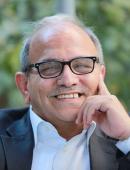
Mr. Hani Al-Masri argues that there can be no serious discussion of how to revive the Palestinian political landscape without first making a proper diagnosis of its condition. If the current impasse is essentially a crisis of legitimacy, then elections could provide an entry point for renewing that legitimacy. But if the crisis is the result of a series of accumulated problems , concerning legitimacy, the absence of an inclusive national project, leadership and institutions, political strategies and forms of struggle , and is compounded by existential threats arising from the policies of the most hardline Israeli government since the establishment of Israel, which is effectively pursuing a plan to determine the outcome of the conflict and eliminate the Palestinian cause, then elections alone cannot provide the answer.
In Al-Masri’s view, breaking out of this impasse requires a fundamental review that leads to a change in the political course and the construction of a national alternative. This means reshaping the national project, institutions, leadership, strategies and forms of struggle. Elections, he stresses, are part of this process of change; they are neither a substitute for it nor its central component.
This is particularly important because elections would take place under occupation, which controls many aspects of Palestinian life and places the Palestinian Authority under onerous political, economic and security obligations. All of this is taking place while the Palestinian political divide continues and repeated efforts to end , or even ease , it has failed.
Elections in a State of Uncertainty
Al-Masri describes the Palestinian situation as having reached a degree of “surrealism” as the deadline for submitting electoral lists approaches while the fate of the elections remains unclear. Some political forces say they neither want nor expect elections under the current circumstances, yet are preparing for them at the same time. Meanwhile, there is a prevailing assessment that Israel, with US backing, may prevent the elections from taking place, with the possibility of holding them at a later date.
The uncertainty, he notes, is not driven by external factors alone. It is also shaped by internal calculations, foremost among them Fatah’s concern that the results could expose declining support for the leadership and the Palestinian Authority amid mounting economic, social and political crises, the repercussions of Fatah’s eighth congress, and the absence of a unifying political programme or a clear commitment to the public interest. In such an environment, everyone , particularly those who have been pushed aside , is increasingly driven to look after their own interests.
Even more troubling, Al-Masri argues, is that the decision to hold elections does not appear to emanate from a Palestinian institution with a clearly defined mandate. Instead, it seems to depend to a considerable degree on an individual decision that could be changed at the last minute.
As a result, he says, all scenarios remain on the table: elections could go ahead; they could be postponed; Israel could prevent or obstruct them under the pretext of administrative or security obstacles; the process could be reduced to what are known as “electoral colleges”; national dialogue could be revived; the Legislative Council could be brought back into the picture; its committees could be headed by members of the Palestinian National Council; another formula could be devised to reshuffle the institutions; or even a constituent assembly could be established and entrusted with the entire process.
Al-Masri also points out that the first presidential decree concerning the elections focused on the Palestinian National Council, with a preference for the newly elected council to elect the President of the State of Palestine. That course was subsequently altered under external pressure, particularly from Europe, making legislative elections the priority and postponing the presidential vote.
Should the elections be postponed or prevented, he says, attention could instead turn to forming the National Council and expanding the electoral-college model to select all representatives from the West Bank and Gaza Strip.
“It is essential to understand the sensitivity of this stage, and that the decisive priority is not achieving national objectives, but providing the Palestinian people and their cause with the means to endure and survive.”
Calculations That Did Not Materialize
According to Al-Masri, some of the earlier calculations appear to have been based on the possibility of early Israeli elections and the implementation of the Trump plan for Gaza, including Hamas relinquishing control, disarming, and the introduction of new international arrangements before the Palestinian elections.
Those calculations, however, did not materialize. Nor, he argues, does the assumption that Hamas has become too weak or incapable of participating appear to hold water. Hamas, he says, is likely to participate through figures who are not formally affiliated with the movement but are close to it, in an attempt to avoid their arrest or assassination.
For Al-Masri, this is itself an indication of the extent to which the elections would not be free from external constraints. He notes that some opinion polls point to declining popularity for both Hamas and Fatah, while the two nevertheless remain the principal political forces. At the same time, neither would command a majority together, according to the polling picture he cites.
He further argues that a broad electoral alliance involving Hamas, the reformist current associated with Mohammed Dahlan, Nasser al-Qudwa, and backed by Palestinian Islamic Jihad could significantly “reshuffle the deck” and alter the political equation.
The picture becomes even more complicated with the possibility of multiple Fatah lists and the prospect of influential figures backing different ones. This could include a list supported by Marwan Barghouti, whom Al-Masri identifies as having the strongest prospects of winning a presidential election should one take place.
Against this backdrop, he describes holding elections amid declining support for the president, a widening gap between the Palestinian Authority and society, competition over the question of succession, rising unemployment and poverty, irregular salary payments, corruption allegations, the failure of the political programme, and the Authority’s inability to confront plans for annexation, displacement and settlement expansion as a high-risk gamble.
Postponement Without Political Change Will Change Nothing
Al-Masri says that postponement of the elections appears increasingly settled in practice, given the absence of genuine electoral activity. What remains, he suggests, is finding the appropriate timing and political cover for such a decision.
The Central Elections Commission, he notes, does not want to provide political cover for postponement or for Israel to block the elections with US support. For this reason, not holding the elections remains the likely scenario in his analysis.
But postponement by itself, he warns, will not change the situation. Unless it is accompanied by changes in policies and performance, reforms to decision-making mechanisms, the removal of restrictions on candidacy, and an end to the monopoly over the political and electoral process, postponement would merely kick the can down the road.
Al-Masri also cautions against building a Palestinian strategy around waiting for a change in the US or Israeli position, or assuming that Hamas has been politically sidelined and that a less hardline Israeli government would adopt a fundamentally different position on Palestinian rights.
Even if the Israeli opposition were to come to power, he argues, it does not offer an alternative based on recognition of the Palestinian people’s right to self-determination. Its composition and programmes, he says, remain far removed from offering a just solution to the Palestinian issue.
The problem, therefore, is much deeper than the date of the elections. “It is a problem of an entire political course that has reached a dead end.”
“There must be agreement on the requirements for free and fair elections, respect for their results, and the lifting of political restrictions on candidates.”
What Is Needed to Revive the Palestinian Political Landscape?
First: Prioritize Resilience and Survival
Al-Masri places the immediate priority on resilience and survival. Given the sensitivity of the current stage, he argues, the overriding priority is not to achieve all national objectives at once, but to ensure the Palestinian people and the cause have the means to withstand the current storm and survive it.
This means reducing losses, preserving what remains of Palestinian gains, and thwarting efforts to eliminate the Palestinian cause. To do so, Palestinians need an appropriate strategy of struggle, a unified national leadership, and the use of available forms of resistance and political action to confront annexation, displacement, genocide, settlement expansion, the Judaization of Jerusalem, the imposition of sovereignty and apartheid, and ethnic cleansing.
At the top of the immediate agenda, he stresses, must be the reconstruction of Gaza.
Second: Put Faith in the People, Not the Existing Political System
Al-Masri calls for putting faith in the Palestinian people rather than relying on a political system that, in his words, “stands helplessly waiting for salvation to fall from the sky.”
He argues that the various components of the Palestinian political system, across the political spectrum, have reached an impasse. The time has therefore come to open the door for the people, political forces, grassroots initiatives and social movements to generate new alternatives.
This does not mean immediately dismantling the existing institutions or stripping them of their legitimacy. Rather, it means moving beyond the current state of paralysis and waiting and creating a new social and political environment capable of sustained action and struggle.
Third: Change Course and Build a National Alternative
For Al-Masri, what is needed is “deep and comprehensive change” , not simply a reshuffling of personalities.
Such change must include a reformulation of the national project while preserving its fundamental objectives, rights and historical narrative. It should also establish goals that are achievable under the present circumstances, rebuild institutions and leadership, adopt appropriate strategies and forms of struggle, and redefine the social contract and national charter.
He further calls for the adoption of consensual democracy and for the development of a different model across Palestinian political, economic and social life , not merely within the political sphere.
“What is required is deep and comprehensive change that does not stop at changing individuals, but extends to reshaping the national project while preserving its objectives, rights and historical narrative.”
Fourth: Adopt a Unified National Position on Elections
Al-Masri argues that Palestinian political forces must agree on the conditions required for free and fair elections, commit to respecting their results, and remove political restrictions on candidates.
He also calls for the international community , particularly the United States, Europe, Canada and Britain , to provide guarantees preventing Israel from interfering in the electoral process, obstructing it or influencing its outcome.
If postponement is ultimately decided upon, he says, it should be tied to a clearly defined date. The current “electoral colleges” process should be brought to an end, while serious consideration should be given to every available option for holding National Council elections in countries where this is possible.
Fifth: Build a Broad National Front
Al-Masri stresses the urgent need for a broad national front bringing together the widest possible range of political forces, institutions and public figures.
Such a front, he says, should not limit itself to opposing or criticizing the official leadership. It must also put forward practical alternatives and workable models in politics, economics, society, public services and development.
The Palestinian people, he points out, are confronting multiple and overlapping challenges: a war of genocide and displacement in Gaza, alongside a campaign of annexation, settlement expansion, segregation and ethnic cleansing in the West Bank, Jerusalem and inside Israel.
Any new or renewed national movement built around reform and change, Al-Masri argues, must identify objectives that can realistically be pursued at this stage and engage directly with the battles being fought today. It should not simply preach about what ought to be or justify the status quo.
Ultimately, he calls for “a realistic and revolutionary national option at the same time” , one that seeks to change reality by recognizing it and engaging with it in order to transform it, without either submitting to it or pretending it does not exist.
Note: This is not a literal, word by word translation of the original article. It is an English adaptation that conveys all of the original article’s ideas and follows its argument and sequence. Direct quotations are taken from the original article.